Access the Scientific Data
Download the full reports to explore the scientific evidence behind VPP and see how it can support a differentiated, higher-value packaging strategy in your product portfolio.
*Download takes less than 30 seconds.
What is Vial Protect Pack
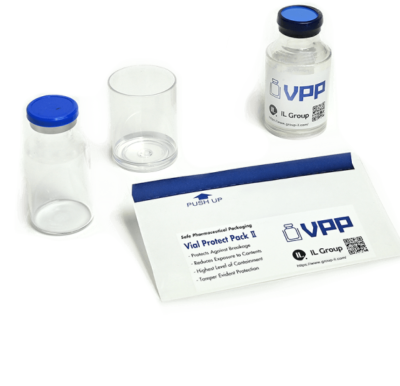
Vial Protect Pack (VPP) is a labeling system specifically designed for pharmaceutical vials. It consists of a glass vial, a plastic protector, and a shrink label. These components are integrated into a single unit, with the assembly fully enclosed and secured by the label. Unlike conventional labels that cover only part of the surface, VPP fully wraps the vial, providing both mechanical protection and containment to reduce risks such as contamination and breakage during handling.
A Differentiated Packaging Strategy Beyond Price Competition
For generic pharmaceutical manufacturers, competing on price alone is no longer sufficient. Increasing regulatory expectations and safety requirements are driving the need for added value in packaging. External contamination, vial breakage, and concerns about product integrity are becoming critical differentiators. Vial Protect Pack enables a shift from cost-driven competition to value-based differentiation through a safer, more advanced packaging solution.

Scientific Studies Validating VPP Performance
To support decision-making with scientific evidence, independent studies have been conducted to evaluate the performance of VPP under real-world conditions.
Below, we introduce 3 of those independent studies.

Eliminating External Contamination Risk
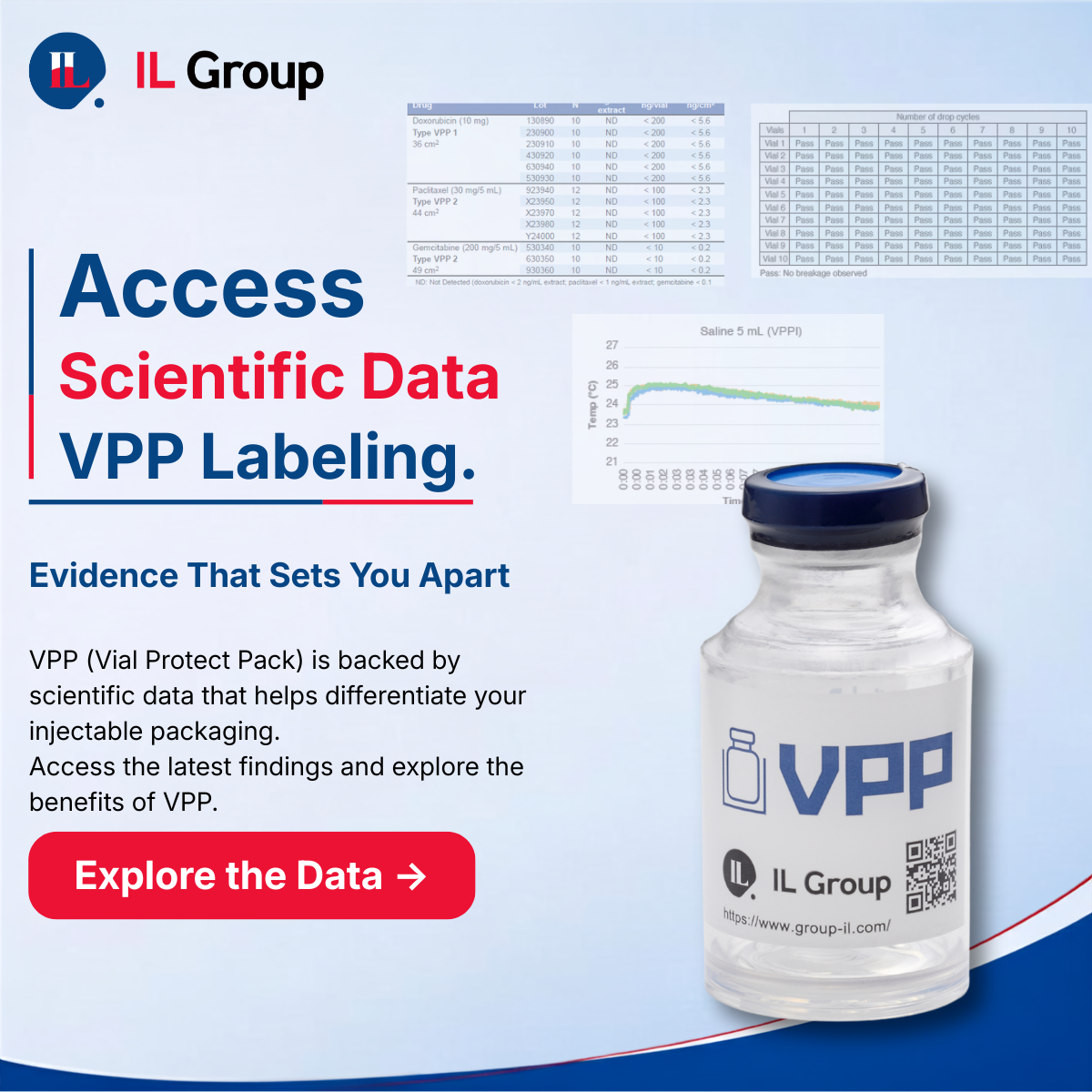
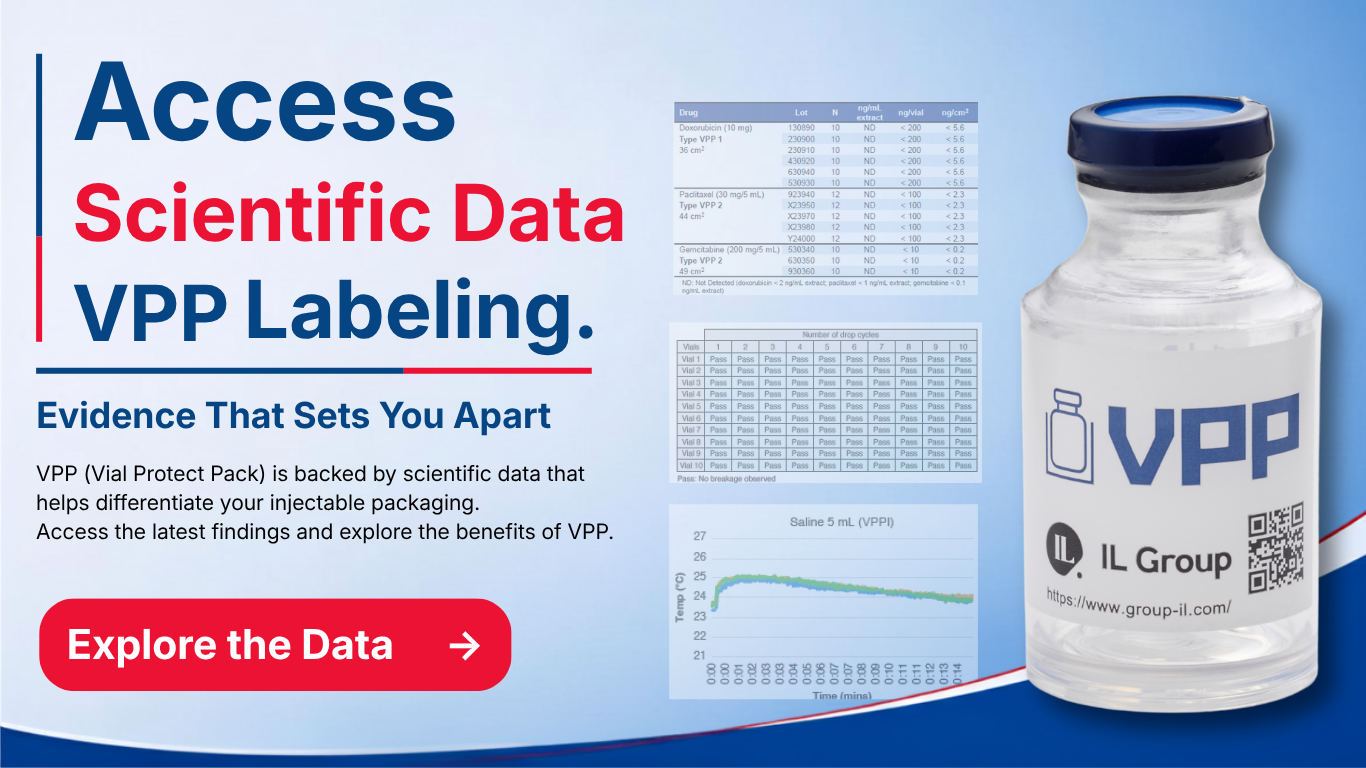
The first dataset focuses on external contamination. A paper published in JOPP (the Journal of Oncology Pharmacy Practice) evaluated surface contamination on the exterior of 150 commercially available anticancer drug vials across three product types that were packaged with VPP. No contamination was detected on any of the vials tested, providing evidence that VPP effectively removes measurable surface contamination and may contribute to reducing the risk of occupational exposure.
Read the full paper for detailed results in the Journal of Oncology Pharmacy Practice:
Superior Protection Against Vial Breakage
The second dataset examines drop durability. In comparative testing, unprotected glass vials showed breakage under repeated drop conditions. In contrast, VPP II demonstrated no breakage even after 10 consecutive drops from height. This indicates that VPP can significantly improve mechanical resistance, reducing product loss and preventing leakage or scattering in case of accidental drops.
Minimal Impact on Drug Temperature and Quality
The third dataset evaluates thermal impact during the labeling process. Because VPP uses heat-shrink technology, potential effects on drug products must be carefully assessed. The study confirmed that the temperature increase during VPP application is minimal, approximately 0.6 to 2.1 degrees Celsius. This shows that the packaging process has negligible impact on liquid formulations, including temperature-sensitive materials.
Why Differentiated Packaging Matters
The three scientific studies provide clear, data-backed evidence that supports VPP as a differentiated packaging solution. By addressing contamination control, mechanical protection, and product integrity in a single system, VPP offers a unique position beyond standard labeling approaches. This enables manufacturers to strengthen their value proposition and stand out in increasingly competitive markets.

Access the Scientific Data
Download the full reports to explore the scientific evidence behind VPP and see how it can support a differentiated, higher-value packaging strategy in your product portfolio.
*Download takes less than 30 seconds.
Need a More Detailed Discussion?
If you would like to evaluate VPP for your specific products or process, our team is ready to support you.
Contact us to discuss your requirements and explore how VPP can enhance your packaging and differentiation strategy.
You might also like